Website Compliance Services for Local Businesses
Protect Your Business. Improve Accessibility. Build Customer Trust.

Your website should help customers find, understand, and do business with you—not create unnecessary accessibility barriers, privacy concerns, security weaknesses, or compliance risks.
FlowMajik helps local businesses identify and address website compliance concerns through a comprehensive 40-point website compliance assessment, professional remediation support, and ongoing compliance monitoring. Whether you operate a healthcare practice, law firm, home service company, restaurant, salon, retail business, professional service firm, or another local business, we help you understand where your website may be vulnerable and what steps can be taken to improve it.
Start With a Free 40-Point Website Compliance Scan
Receive a personalized website compliance report by email within 1–2 business days, followed by the option to discuss your results with a website compliance specialist.
No obligation. No technical knowledge required.
Your Website May Have Compliance Issues You Cannot See
A website can look professional and still contain problems that affect accessibility, privacy, transparency, security, and the customer experience.
Accessibility Issues
- Images without meaningful alternative text
- Forms that cannot be properly used with assistive technology
- Text with insufficient color contrast
- Navigation that cannot be completed using a keyboard
Privacy & Tracking
- Missing or incomplete privacy disclosures
- Website tracking technologies that are not properly disclosed
- Inadequate cookie-consent controls
- Unclear data-collection practices
Security & Disclosures
- Insecure forms or outdated website components
- Missing legal and consumer-information pages
- Inconsistent terms, policies, or disclosures
- Missing accessibility information
Usability & Media
- Videos without captions or transcripts
- Third-party tools that introduce additional concerns
- Mobile experiences that are difficult for some visitors to use
These issues may prevent potential customers from using your website, weaken trust in your business, and expose your organization to avoidable risk.
More Than 1 in 4 U.S. Adults Has Some Type of Disability
28.7%
of adults in the United States have some type of disability.
Accessibility is not a niche concern. It directly affects a substantial portion of the customers local businesses serve. Making your website easier to perceive, navigate, understand, and operate can improve the experience for people with visual, hearing, mobility, cognitive, neurological, and other disabilities.
50,960,288
distinct accessibility errors detected on top 1M home pages.
The Scope of Compliance
What Is Website Compliance?
Website compliance is the ongoing process of evaluating and improving a website so that it more appropriately addresses applicable accessibility, privacy, consumer-protection, security, disclosure, and data-handling expectations.
Depending on your business, customers, website functionality, data practices, industry, and geographic reach, relevant considerations may include:
- The Americans with Disabilities Act
- Web Content Accessibility Guidelines
- WCAG 2.1 and WCAG 2.2
- CCPA and CPRA
- GDPR
- Federal Trade Commission guidance
- State consumer privacy requirements
- Cookie consent & tracking disclosures
- Privacy-policy requirements
- Accessibility statements
- Consumer-protection disclosures
- Data-security practices
- Industry-specific privacy obligations
- Website terms and service policies
Not every law or standard applies to every business in exactly the same way. That is why FlowMajik evaluates your website, business type, website features, and visible data practices instead of relying on a generic one-size-fits-all checklist.
The Department of Justice Recognizes Website Accessibility as an ADA Concern
The U.S. Department of Justice explains that websites operated by businesses open to the public can create barriers that prevent people with disabilities from accessing goods, services, information, and privileges.
The Department identifies barriers such as:
- Poor color contrast
- Missing image descriptions
- Videos without captions
- Inaccessible forms
- Mouse-only navigation
- Improperly structured website content
Website accessibility is not simply about adding a button, installing a toolbar, or displaying an accessibility symbol. Meaningful accessibility requires an evaluation of the website’s content, code, structure, navigation, forms, media, and user experience.
40-POINT FRAMEWORK
Six Major Compliance Categories
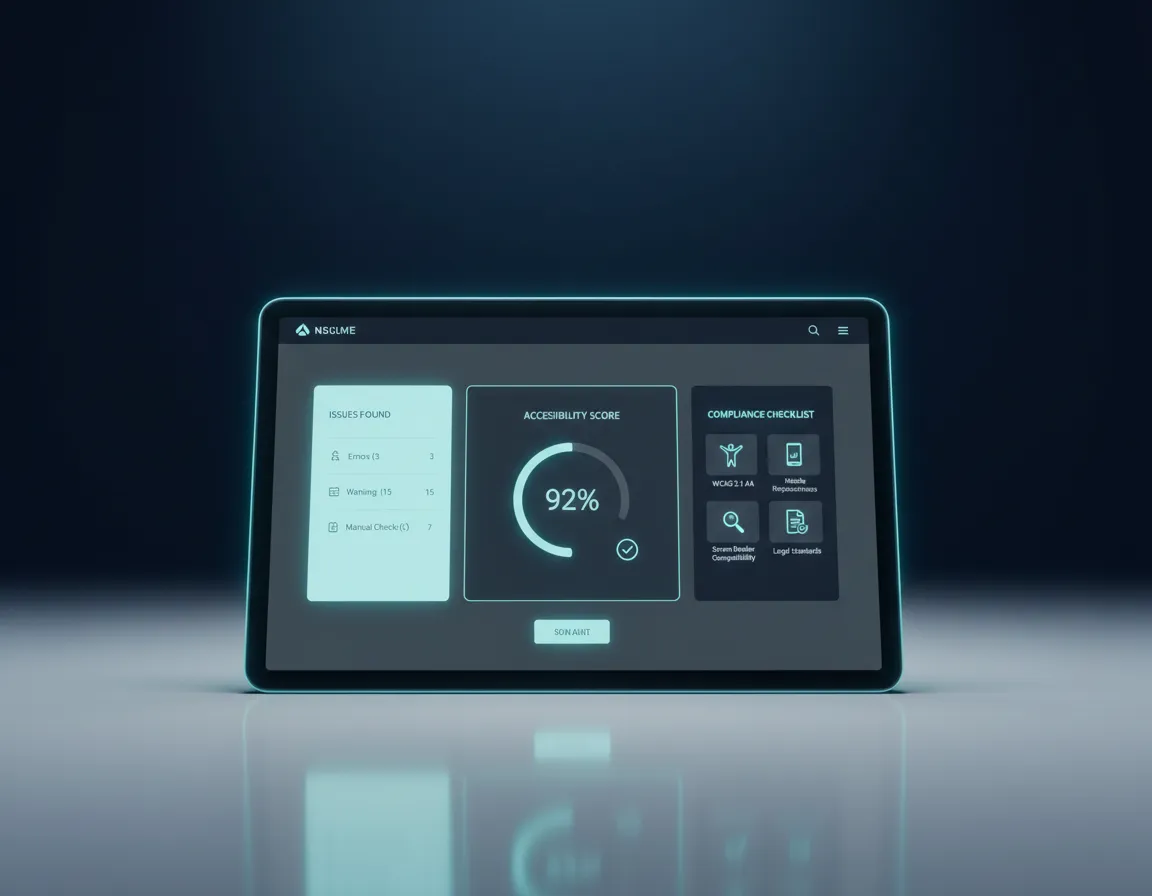
Website Accessibility
We evaluate visible and detectable accessibility concerns that may prevent people with disabilities from effectively using your website. The assessment is informed by recognized accessibility practices and the Web Content Accessibility Guidelines.
- Alternative text for meaningful images
- Color contrast and text readability
- Keyboard navigation and focus indicators
- Video captions and audio alternatives
- Form labels and heading structure

Privacy and Data Collection
We review how your website appears to collect, use, disclose, and explain personal information. The goal is to help identify gaps between what your website does and what it tells visitors.
- Privacy-policy availability and consistency
- Data-collection and contact-form disclosures
- Newsletter and marketing consent
- Sensitive-information collection
- Data-sharing and consumer privacy rights
Cookie Consent and Tracking Transparency
Many websites use analytics, advertising pixels, embedded videos, chat tools, scheduling systems, and other third-party technologies. We review whether your website appropriately communicates its use of these technologies and whether visitors are given suitable controls.
- Cookie-banner availability and consent choices
- Cookie categories and nonessential tracking behavior
- Third-party tracking and analytics disclosures
- Advertising-pixel disclosures

Consumer Protection and Legal Disclosures
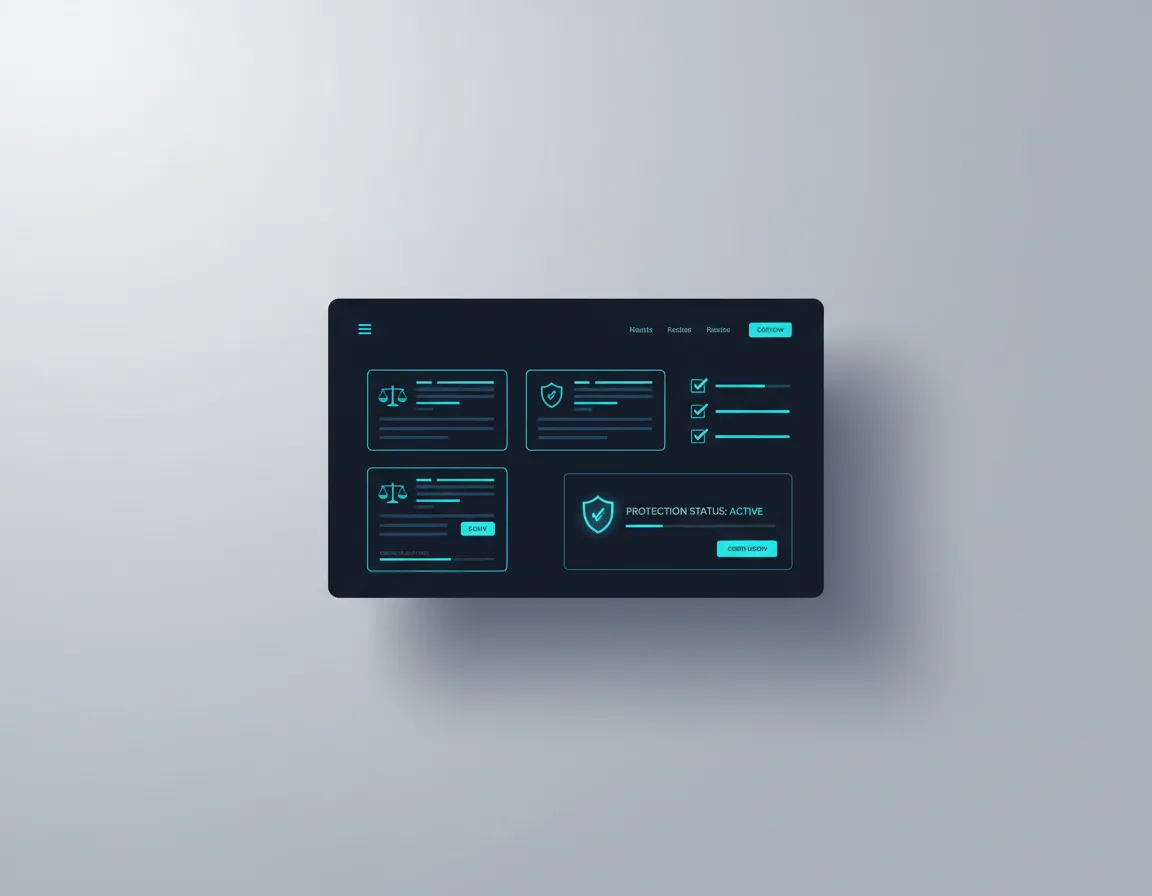
Your website should clearly communicate important terms that affect customers. Depending on the business and website, we review the presence and clarity of these essential disclosures.
- Terms and conditions and professional disclaimers
- Refund, cancellation, and shipping policies
- Pricing, subscription, and auto-renewal information
- Testimonials, endorsements, and affiliate disclosures
- Contact and business identity information
Website Security and Trust Indicators
Website compliance and responsible data handling depend in part on basic website security practices. The assessment reviews visible security configurations to identify potential vulnerabilities.
- HTTPS implementation and SSL certificate status
- Secure form submission and exposed sensitive information
- Outdated website components and third-party integrations
- Security-header indicators and mixed-content warnings


Industry and Business-Specific Risk
Different businesses collect different information, serve different customers, and face different responsibilities. The report highlights areas that deserve additional attention based on the business model and visible website functionality.
- Services offered and information collected
- Online booking or payment functionality
- Health-related or sensitive information collection
- Whether the business serves children
- Interstate or international visitors
PROCESS ROADMAP
How the Free Website Compliance Scan Works
FlowMajik's free scan provides a structured review of the most important compliance-related areas visible on your website. Here is exactly what happens when you request your personalized report.
STEP 01
Submit Your Website
Complete the free scan form with your name, business information, website URL, contact information, and industry.
STEP 02
We Review Your Website
FlowMajik evaluates the website using its 40-point compliance framework, supported by automated tools and professional review.
STEP 03
Receive Your Personalized Report
The report will be delivered securely to your email within 1-2 business days.
STEP 04
Review Your Findings
The report explains the most important concerns across all major compliance categories in clear, understandable language.
STEP 05
Choose Your Next Step
Address the recommendations independently or book a consultation to discuss professional remediation and ongoing monitoring.
No obligation. No technical knowledge required.
Free 40-Point Website Compliance Scan
Find Out Where Your Website May Be Vulnerable
Pick a date/time to schedule your consultation. Complete the form that follows, and FlowMajik will analyze and review your personalized website compliance report with you.
What You Receive
A comprehensive breakdown of your website's current compliance posture, including:
- A Website Compliance Overview
- Category-Level Findings
- Identified Concerns
- Priority Levels
- Recommended Next Steps
- Remediation Opportunities
- Optional Consultation
Turnaround Time
Your personalized report will be delivered securely by email within 1–2 business days of your request.
Zero Obligation
This assessment is entirely free. Review your findings independently or discuss them with a compliance specialist on an optional consultation call.
By submitting this form, you acknowledge that the information you provide will be handled in accordance with FlowMajik’s Privacy Policy. Do not submit passwords, financial information, medical information, or other sensitive personal data through this form.
WEBSITE COMPLIANCE FOR LOCAL BUSINESSES
Industries We Serve
FlowMajik provides website compliance assessments and remediation support to local businesses around the world.
Healthcare and Medical Practices
Healthcare websites may collect appointment requests, health-related questions, insurance details, or other sensitive information. They may also serve patients who rely on accessible forms, readable content, captions, and keyboard navigation.
Legal Services
Law firms must communicate clearly with prospective clients and provide accessible ways to request help. Important areas may include accessibility, attorney-advertising disclosures, testimonials, contact forms, professional disclaimers, and privacy.
Home Service Businesses
Home service companies often rely heavily on online quote requests, phone calls, scheduling forms, tracking technologies, and local advertising.
Restaurants and Food Services
Restaurant websites should make menus, hours, locations, ordering options, reservations, and contact information accessible. Concerns may include accessible digital menus and ordering systems.
Salons, Spas, and Beauty
These businesses frequently use online booking platforms, galleries, promotional forms, online stores, memberships, and text-message marketing.
Professional Services
Professional-service websites often collect lead information and communicate claims about experience, results, qualifications, or expertise.
All Other Local Business Industries: Website compliance is relevant wherever customers depend on a website to access information, communicate with a business, request services, schedule appointments, or make purchases.
Professional Remediation & Monitoring
Professional Remediation
Finding an issue is only the first step. FlowMajik can provide a custom remediation plan based on your report and website platform to address visible compliance gaps.
- Fixing alternative text for images
- Improving color contrast
- Updating privacy disclosures
- Enhancing keyboard navigation
- Implementing cookie-consent controls
- Coordinating corrections with your web provider
Ongoing Monitoring
Website compliance can change after a redesign, software update, new plugin, or marketing campaign. Our monitoring helps identify new issues before they go unnoticed.
- Tracking website and content changes
- Detecting new accessibility issues
- Monitoring for broken links
- Reviewing new third-party integrations
- Periodic compliance summaries
- Prioritized remediation recommendations
Remediation services are custom-quoted after the free scan and consultation. The scope and price depend on your website size, platform, and identified issues.
BEYOND AUTOMATION
Automated Tools Alone Are Not Enough
Automated scanning can identify many technical concerns, but it cannot fully determine whether a website is accessible, legally compliant, understandable, or appropriate for a particular business.
Some concerns require professional review, including whether alternative text accurately communicates an image's purpose, whether navigation makes sense, whether a privacy policy matches actual data practices, and whether consent language is appropriate.
FlowMajik's process combines structured technology-assisted analysis with professional review.
Why Local Businesses Choose FlowMajik
Comprehensive Review: We examine accessibility, privacy, cookies, consumer disclosures, website security, and business-specific risks through one coordinated framework.
Plain-Language Reporting: Business owners do not need to be attorneys, developers, or privacy specialists to understand their reports.
Practical Recommendations: We explain what was identified, why it matters, and what may be done next.
Remediation Support: FlowMajik can help implement recommended improvements instead of leaving the business with a technical report it cannot use.
Ongoing Monitoring: We can help review the website as it changes over time.
Built for Local Businesses: Our approach is designed around the operational realities, budgets, websites, and customer journeys of local businesses.
Global Service: FlowMajik supports local businesses across the United States, and many countries around the world.
TRANSPARENCY & CLARITY
Frequently Asked Questions
What is included in the free website compliance scan?
The free scan reviews the website across FlowMajik’s 40-point framework. Findings are summarized into major categories, including accessibility, privacy, cookie and tracking transparency, consumer disclosures, security indicators, and industry-specific considerations.
The free scan is designed to identify visible and detectable concerns. It is not a legal opinion, certification, penetration test, or guarantee of compliance.
Is the website compliance scan really free?
Yes. The initial 40-point website compliance scan is provided without charge.
After receiving the report, the business owner may choose to schedule a consultation or request a quote for remediation and ongoing monitoring. No additional purchase is required.
How long does the scan take?
The personalized report will generally be delivered by email within 1-2 business days after FlowMajik receives the required information.
A larger, highly complex, unavailable, or password-protected website may require additional review.
What happens after I receive the report?
The business owner may review the report independently or schedule an optional consultation with FlowMajik.
During the consultation, FlowMajik may:
• Explain the findings
• Answer questions about identified concerns
• Discuss recommended priorities
• Review possible remediation options
• Discuss ongoing monitoring
• Prepare a custom service quote where appropriate
Does FlowMajik guarantee that my website will be fully compliant?
No responsible provider can guarantee that a website will remain completely compliant with every law, regulation, technical standard, interpretation, platform change, and third-party integration.
Compliance depends on many factors, including business practices, geographic reach, data collection, industry, website functionality, third-party vendors, and legal obligations.
FlowMajik helps identify concerns, implement practical improvements, and support ongoing monitoring.
Does FlowMajik provide legal advice?
No. FlowMajik provides website compliance assessments, technical and operational recommendations, remediation support, and monitoring services.
FlowMajik is not a law firm, and its services do not constitute legal advice or create an attorney-client relationship.
Businesses should consult a qualified attorney regarding the interpretation or application of laws to their circumstances.
Is WCAG the same as the ADA?
No.
The Americans with Disabilities Act is a U.S. civil-rights law. The Web Content Accessibility Guidelines are technical accessibility standards developed through the World Wide Web Consortium.
WCAG provides recognized guidance for making website content more accessible. The U.S. Department of Justice identifies WCAG as an existing technical standard that can provide helpful web-accessibility guidance.
Which WCAG version do you consider?
The assessment may consider recognized practices reflected in WCAG 2.1 and WCAG 2.2.
W3C encourages organizations to use the latest WCAG version. WCAG 2.2 contains 13 guidelines organized under four principles: perceivable, operable, understandable, and robust.
Can an accessibility overlay make my website compliant?
An overlay, widget, or toolbar may add certain user controls, but it does not necessarily correct problems in the underlying content, code, forms, navigation, documents, media, or third-party tools.
Website accessibility should be addressed through the website’s underlying design, content, structure, and functionality.
Do small businesses need to consider website compliance?
Business size is only one consideration.
Website responsibilities may depend on factors including:
• Type of business
• Whether the business is open to the public
• Information collected
• States or countries served
• Number of consumers whose data is processed
• Industry-specific rules
• Contractual obligations
• Website functionality
• Representations made to consumers
Small businesses should not assume that all accessibility, privacy, or consumer-protection considerations are automatically inapplicable.
Does every privacy law apply to every business?
No.
Privacy-law applicability may depend on thresholds, business location, customer location, annual revenue, data-processing volume, industry, type of information collected, and other factors.
The scan identifies visible privacy and transparency concerns but does not determine legal applicability with certainty.
Will you review my privacy policy?
Yes. When a privacy policy is publicly available, it may be reviewed for visible concerns involving completeness, clarity, internal consistency, contact information, data-collection disclosures, and consistency with detectable website technologies.
This review is not a legal opinion.
Do you check cookie consent?
Yes. The scan may review whether a cookie notice or consent mechanism is present, what choices it provides, whether tracking disclosures appear available, and whether the implementation raises visible concerns.
A complete assessment of tracking behavior may require deeper technical access or additional paid services.
Do you review accessibility on mobile devices?
Yes. Mobile accessibility and usability are considered because many customers access local-business websites from smartphones and tablets.
Do you scan every page?
The free scan focuses on representative, publicly available pages and important customer pathways.
A full-site assessment covering every page, file, form, application state, and third-party integration may require a paid audit or remediation engagement.
Can you fix the issues identified in the report?
Yes. FlowMajik provides website compliance remediation services.
After the scan and consultation, FlowMajik can prepare a custom quote based on the website platform, findings, size, integrations, and required work.
Can you work with my existing website provider?
Yes. Depending on the business owner’s preferences and the required access, FlowMajik may:
• Implement corrections directly
• Provide recommendations to the existing provider
• Coordinate with an internal team
• Review corrections completed by another provider
• Conduct follow-up testing
How much does remediation cost?
Remediation is custom-quoted after the free scan and consultation.
Pricing depends on the size and complexity of the website, number and severity of issues, website platform, integrations, content, forms, and required level of support.
How much does ongoing monitoring cost?
Ongoing monitoring is custom-quoted.
Pricing depends on the number of pages, website complexity, review frequency, reporting needs, risk level, and whether remediation support is included.
Will I receive a compliance certificate?
The free scan does not provide a legal compliance certification.
Where appropriate, FlowMajik may provide documentation describing the review performed, improvements completed, and monitoring activities conducted. Such documentation is not a legal certification or guarantee.
Can website compliance improve the customer experience?
Yes.
Many compliance-related improvements also make websites:
• Easier to navigate
• Easier to read
• Easier to use on mobile devices
• More understandable
• More trustworthy
• More consistent
• More usable for older adults
• More accessible to people with disabilities
• Easier for search engines to interpret
IS YOUR WEBSITE HELPING EVERY CUSTOMER?
Take the First Step Toward a More Accessible, Transparent, and Trustworthy Website
You do not have to guess whether your website contains compliance concerns. FlowMajik’s free 40-point website compliance scan helps you understand where your website stands, what may require attention, and which improvements should be prioritized.
Your personalized report is delivered within 1-2 business days and includes:
A structured 40-point review • Clear category-level findings • Priority recommendations
Identified accessibility & privacy concerns • Professional remediation options
FlowMajik provides website compliance assessments, technology-assisted reviews, operational recommendations, remediation support, and ongoing monitoring.
FlowMajik is not a law firm and does not provide legal advice, legal opinions, legal representation, or guarantees of compliance. No attorney-client relationship is created through the use of this website or FlowMajik’s services.
Laws, regulations, technical standards, interpretations, and website technologies change over time. Applicability may vary based on the business, industry, jurisdiction, customers, website functionality, data practices, and other circumstances. Customers should consult qualified legal counsel regarding their specific legal obligations.
FlowMajik helps local service businesses use practical digital marketing, local search strategy, automation, and AI-supported systems to improve visibility, strengthen customer communication, and create more opportunities for growth.
Email: [email protected]
Telephone: 1 (877) 332-1577
Copyright © 2026 FlowMajik . -- All Rights Reserved
We’re on a mission to build a better future where technology creates good jobs for everyone.